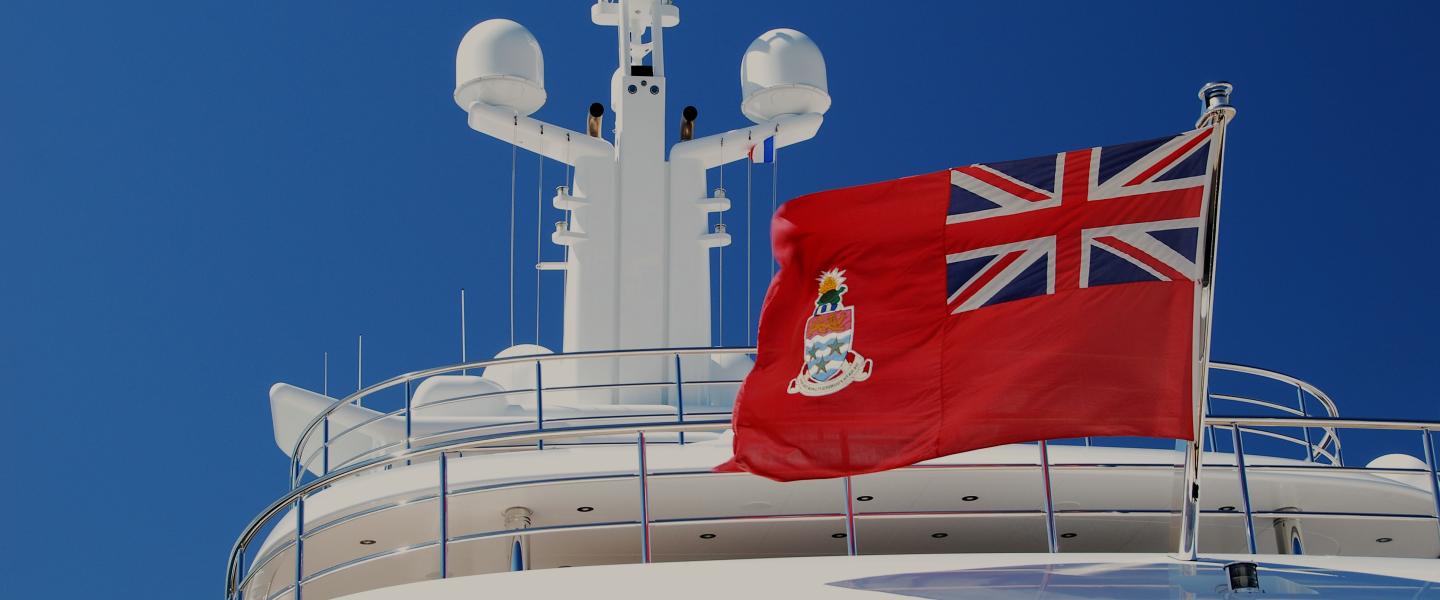
The Maritime Authority of the Cayman Islands is undertaking a concentrated inspection campaign focused on sexual harassment. It’s the next step in the registry’s long-term commitment to crew welfare, and it follows the release of Guidance Note 05/2025 (Rev 1.0) HARASSMENT AND SEXUAL MISCONDUCT ON BOARD SHIPS.
“Drafting the Guidance note was only the start of the campaign, and as with any support initiative, it is important to keep reinforcing the message,” said Peter Southgate, Regional Director, Americas and Yacht Code Specialist for the Cayman Registry. “We want to ensure that all industry stakeholders fully understand the issues at hand and remind everyone that we all have a role to play to stamp out this issue.”
The Registry maintains a fleet of approximately 2,700 vessels. The vast majority are pleasure yachts with only about 250 needing to be compliant with the Maritime Labour Convention (MLC). Many other vessel owners opt to comply voluntarily, though, as they operate their vessel both for charter and for private use.
“While initiatives relating to sexual harassment and misconduct have received attention in the commercial sector, the privacy that high net worth individuals expect has served to promote a culture of confidentiality that requires more targeted messaging,” says Southgate. The Cayman Registry wants everyone to understand what constitutes sexual harassment and to reassure crew that they must not tolerate such behaviour.
The Guidance Note explains sexual harassment as behaviour characterised by the making of unwelcome and inappropriate sexual remarks or physical advances in a workplace or other professional or social situation. Sexual assault is generally characterized by unwanted sexual contact, often involving force, threats or manipulation, and is frequently perpetrated by someone in a position of power over the victim. This type of conduct is invariably a criminal matter.
The Guidance Note has been well received. “One of the positive impacts is raised awareness of the issue and clarity about the type of behaviour we are trying our best to eliminate,” said Southgate. “Having an understanding as to what types of conduct may be considered harassment or sexual abuse is fundamental to tackling this issue. We also want to provide a path for seafarers who have suffered this type of conduct to obtain the best resolution.”
Still, he says that as a Flag State, they are less equipped to deal with the aftermath of a sexual assault, and there are numerous organisations that have the necessary expertise and resources to support seafarers. The Guidance Note includes advice on these support avenues.
Complaints relating to crew safety and welfare can be raised with the Registry’s Shipping Master, and this may result in an unscheduled MLC inspection being conducted to investigate potential breaches. For non-MLC vessels, there is a general power under the law for an investigation to be conducted where misconduct or negligence is suspected. Although outside the Flag State remit, Non-Disclosure Agreements, even though signed, cannot prevent a seafarer from reporting a safety or wellbeing issue or incident.
The Shipping Master role is kept separate from the Registry’s enforcement role, as their job is to secure a remedy for the seafarer. The Registry’s role is to provide the deterrent. “Our penalties are normally against the master or an officer who is guilty of causing injury or illness to another individual,” says Southgate.
The situation becomes complicated if a yacht guest is involved. The ultimate sanction in that case would be against the vessel, and repeated failure to control this behaviour could lead to the Maritime Labour Certificate being revoked preventing future charters. “The important thing is that the seafarer gets looked after. We can ensure that happens, even if we can’t act against the perpetrator if they're not governed by our laws. Whilst we cannot always take action against a person not falling under Flag State jurisdiction, it is important to remember that sexual assault committed by such a person can be investigated by the Local Authorities within the jurisdiction where the incident occurs. In the case of incidents occurring in international waters, this would be referred to the Royal Cayman Islands Police Service.”
The Registry’s focus on transparency, remediation and enforcement ensures that issues are dealt with fairly and effectively. Although issues raised with the Shipping Master remain confidential initially, the next step, with the seafarer’s permission, might be to pass the complaint on to the Safety and Compliance section. “The Shipping Master’s role is primarily for dispute resolution, and he does not get involved in enforcement. It is important to separate these two roles to ensure that in the first instance the seafarer can obtain the necessary remedy with the enforcement team providing the necessary deterrent for future breaches.”
Crew can be confident that their complaints will be taken seriously. “People understand that there is a lot to be gained from actually making a report. They're actually seeing our reports, which are publicly available on the website, and they can see the types of incidents that are occurring. This raises awareness.”
Additionally, the Registry sponsors events aimed at promoting seafarer welfare and liaises with organisations such as ISWAN, Nautilus and ITF to promote seafarer safety and well-being. The Registry also contributes annually to Yachty Minds Matter run by Captain Kelly Gordon, supporting her counselling for people who have suffered distressing situations and providing speakers at her industry events. This expands the Registry’s outreach and provides more opportunity to explain what resources are available to seafarers.
“Word has spread over the years, and seafarers have learned that they can raise their complaint with us and it will be dealt with. This year’s concentrated inspection campaign is focused on how effectively seafarer complaints are being managed, as this is key to creating a culture of compliance, accountability and safeguarding across the fleet.”
Access Guidance Notes HERE
ENDS.
Source: Human Rights at Sea 2026. Wendy Laursen.
Photo credit: Shutterstock (Licensed).
Contact: If you have any questions, please write to us at enquiries@hrasi.org.
About Sharing. We welcome the use and dissemination of our copyrighted work with full, accurate and proper accreditation. Open Access This article is licensed under a Creative Commons Attribution 4.0 International License, which permits use, sharing, adaptation, distribution and reproduction in any medium or format, as long as you give appropriate credit to the original author(s) and the source, provide a link to the Creative Commons licence, and indicate if changes were made. The images or other third-party material in this article are included in the article's Creative Commons licence, unless indicated otherwise in a credit line to the material. If material is not included in the article's Creative Commons licence and your intended use is not permitted by statutory regulation or exceeds the permitted use, you will need to obtain permission directly from the copyright holder. To view a copy of this licence, visit http://creativecommons.org/licenses/by/4.0/.
©Copyright and Intellectual Property of Human Rights at Sea CIC (HRAS) 2025. All rights reserved.