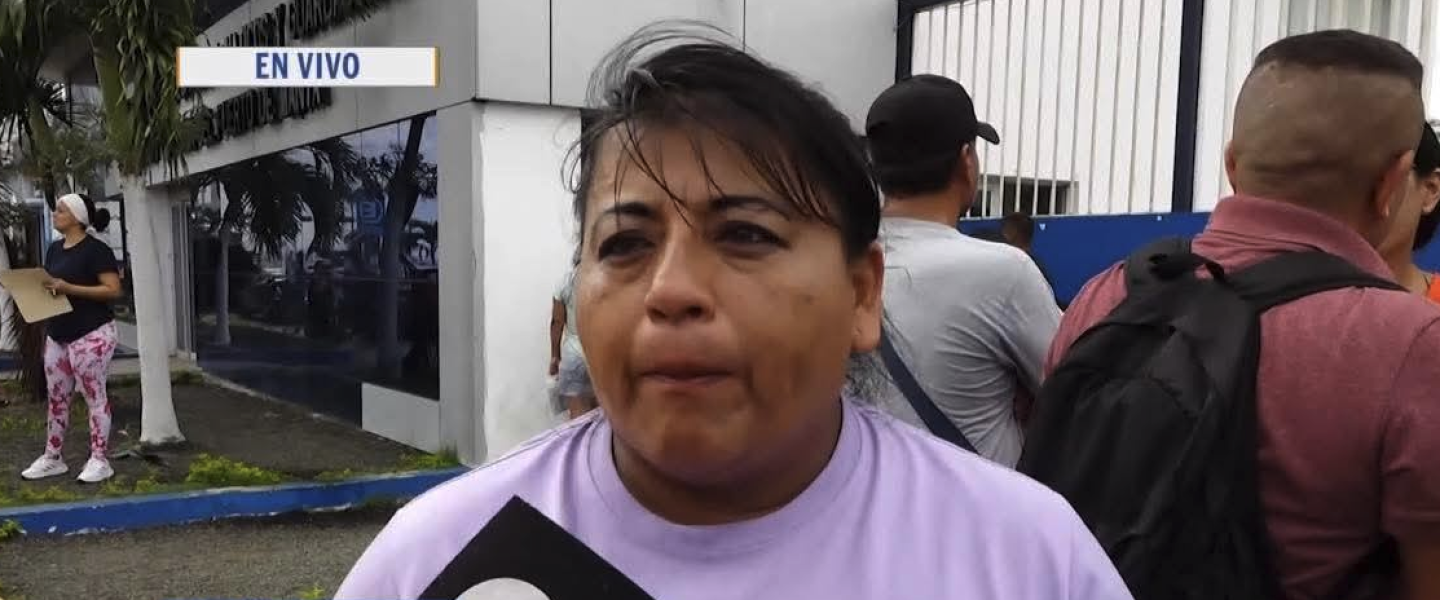
The murder of Ecuadorian activist María Chóez, a vocal advocate for the families of missing tuna fishers is the latest in a disturbing global trend: the targeted killing and disappearance of human rights defenders.
OPINION. According to witnesses on the morning of Thursday, 25 September 2025 in Manta, Ecuador, occupants of a vehicle fired multiple shots hitting the 48-year-old victim in the head killing her.
María was, a well-known neighbourhood and union leader.
She was reported as being a family member of one of the 21 fishermen from the Patricia Lynn tuna vessel that went missing on 22 December, 2024. She had been a vocal advocate about the case.
María's assassination underscores the increasing impunity faced by those people who legitimately challenge abuses, including in the maritime environment.
Wider concerns
According to Global Witness, at least 146 land and environmental defenders were murdered or disappeared in 2024 alone. These defenders were often Indigenous leaders, lawyers, and investigators confronting powerful interests in mining, agribusiness, and organized crime.
But this is not just an issue on land, but at sea, with examples of maritime-related abuses including:
- DFW Indonesia and the National Fishers Center have documented hundreds of cases of forced labor, trafficking, and abuse aboard fishing vessels. One case involved a crew member found decapitated after attempting to escape exploitative conditions in the Aru Sea.
- Environmental Justice Foundation (EJF) investigations into distant-water fishing fleets have revealed slavery, debt bondage, and murder. A Chinese fleet in the Southwest Indian Ocean included North Korean crew that were trapped at sea for years.
These cases are not isolated. They reflect a wider crisis of impunity in the maritime sector, where jurisdictional ambiguity, weak enforcement, and corporate secrecy allow abuses to flourish unchecked.
Maritime Human Rights: A Call for Accountability
Human Rights at Sea (HRAS) have long argued that human rights apply at sea, as they do on land. The Geneva Declaration on Human Rights at Sea, and a decade of reports highlight the urgent need for legal reform, transparency, and protection for those working in fisheries, shipping, as well as maritime advocacy.
HRAS, EJF, DFW Indonesia and many other responsible organisations are calling for:
- Legal recognition and protection of human rights' defenders at sea.
- Mandatory safety protocols for fisheries observers and fishing crew.
- Transparent investigations into deaths and disappearances.
- Accountability for flag states and corporate entities involved in abuses at sea.
Corporate Due Diligence: A Rising Legal Imperative
The EU Corporate Sustainability Due Diligence Directive should have marked a turning point in global corporate accountability.
If properly enacted, if should require large companies to identify, prevent, and mitigate human rights and environmental harms across their entire supply and value chains, including maritime and fisheries operations.
This policy and legal shift is reflected by the International Transport Workers’ Federation (ITF) and Human Rights at Sea, both of which have issued guidance urging companies to implement robust human rights due diligence (HRDD) in maritime supply chains.
These voluntary guidance frameworks emphasize the need for:
- Risk assessments for forced labor and trafficking at sea.
- Worker-centered grievance mechanisms.
- Transparency in vessel ownership and operations.
- Remediation pathways for victims of abuse.
EJF has also called for mandatory transparency measures, including vessel tracking, crew documentation, and the supported the logstanding ITF call for elimination of flags of convenience (FOCs), which often shield abusive operators from direct scrutiny.
A Shared Responsibility
Governments, international bodies, and industry stakeholders must act.
The United Nations, IMO, and regional fisheries management organizations (RFMOs) must prioritise human rights defender's safety, and enforce human rights standards across all maritime sectors.
The murder of María Chóez must not be another forgotten tragedy. It must be a turning point, and a call to protect those who protect others, whether on land or at sea.
ENDS.
Source: Human Rights at Sea 2025. Additional open-source reporting reviewed.
AI. AI was used in the research of this article.
Photo Credit: Jotoro Noticias, Facebook.
Contact: If you have any questions, please write to us at enquiries@hrasi.org.
About Sharing. We welcome the use and dissemination of our copyrighted work with full, accurate and proper accreditation. Open Access This article is licensed under a Creative Commons Attribution 4.0 International License, which permits use, sharing, adaptation, distribution and reproduction in any medium or format, as long as you give appropriate credit to the original author(s) and the source, provide a link to the Creative Commons licence, and indicate if changes were made. The images or other third-party material in this article are included in the article's Creative Commons licence, unless indicated otherwise in a credit line to the material. If material is not included in the article's Creative Commons licence and your intended use is not permitted by statutory regulation or exceeds the permitted use, you will need to obtain permission directly from the copyright holder. To view a copy of this licence, visit http://creativecommons.org/licenses/by/4.0/.
©Copyright and Intellectual Property of Human Rights at Sea CIC (HRAS) 2025. All rights reserved.