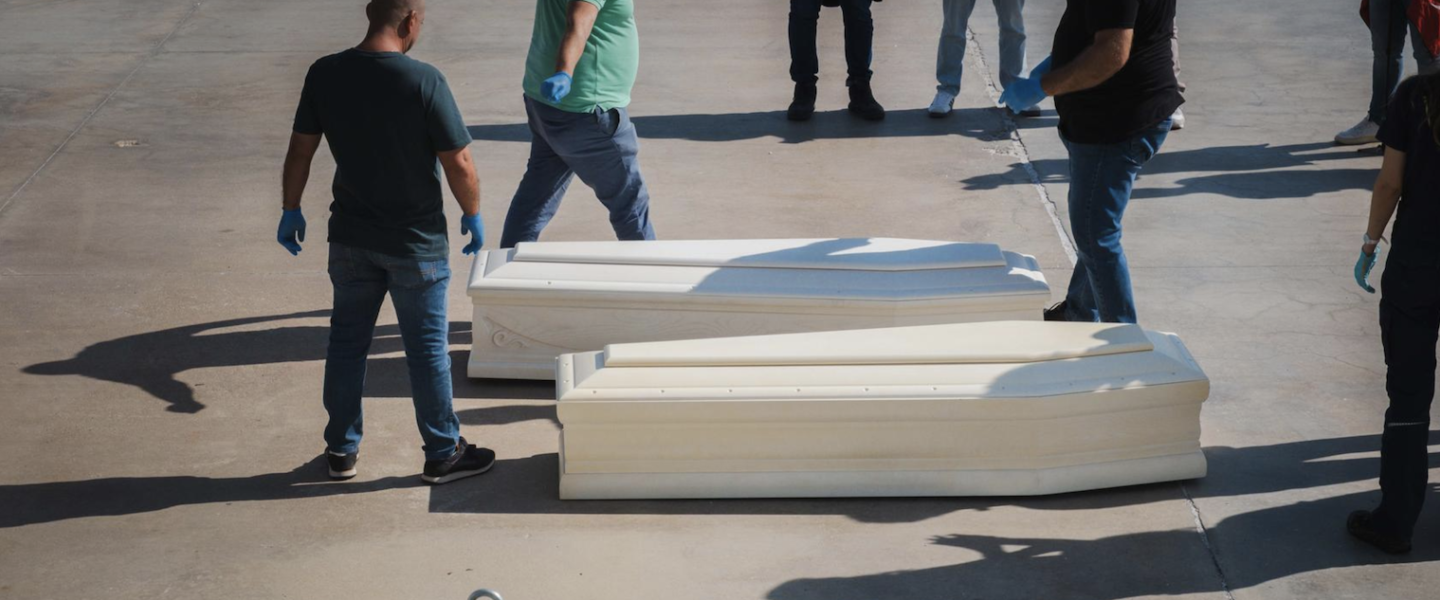
"There are people dying in prison [in Libya]. They are dying of hunger, of sickness, of getting rotten. We had no water to take a shower and no clothes. But if anybody asks for medicine, they come with guns and they hit you. Sometimes in the face, on the chest, and they start beating you from one side to the other. They also hit us with water pipes, which are very strong. When they hit us on the head, the water pipe sometimes broke. They even hit the children very hard."
Survivior testimony.
Berlin, April, 2026. The non-governmental search and rescue organisation SOS Humanity sees its operations in the Central Mediterranean under increasing pressure due to a growing funding gap. The operation of the rescue vessel Humanity 1 is not secured for the second half of the year— whilst this year has seen more people drown whilst fleeing than in any other year since 2014.
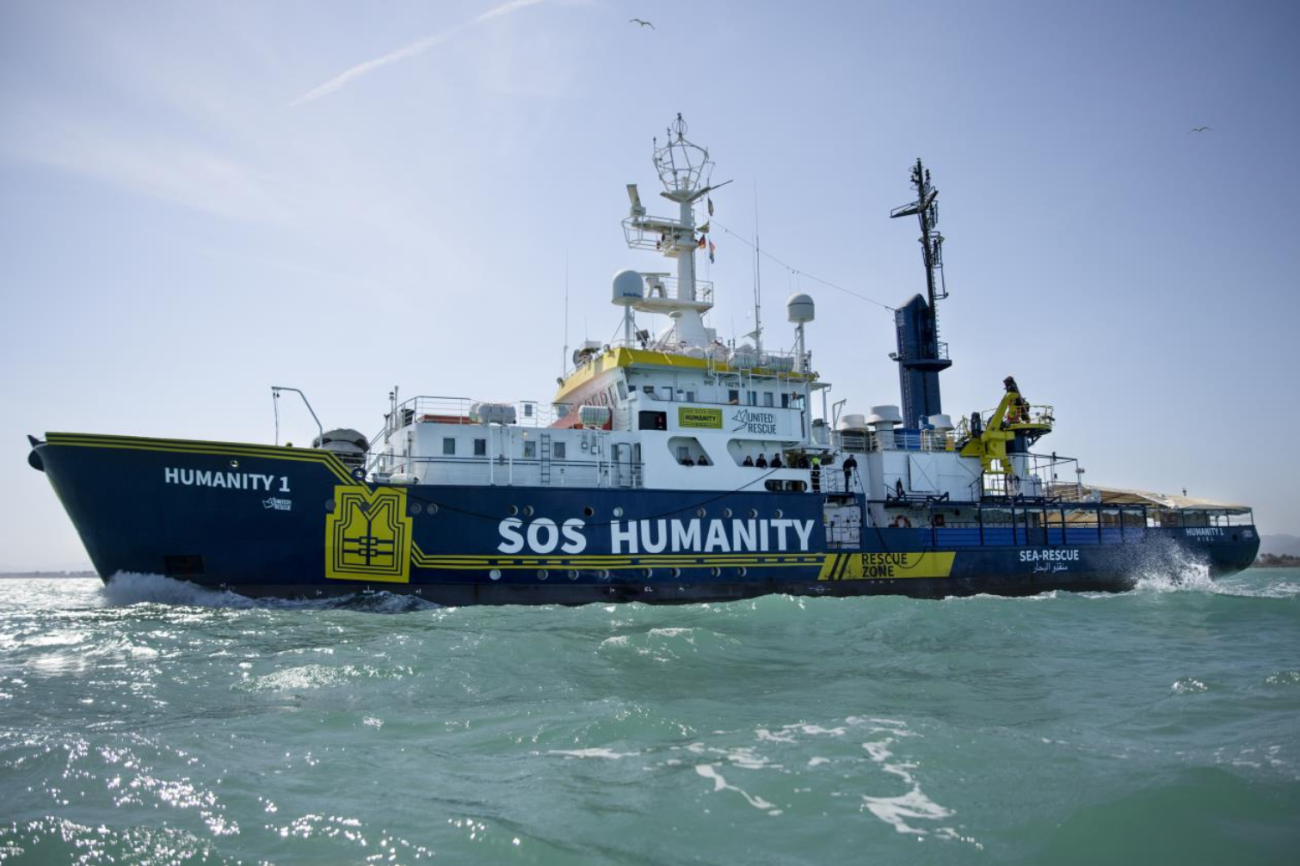
Among the reasons for this are the withdrawal of public funding amounting to €785,000 and a significant rise in operational costs. After ten years of search and rescue missions in the Central Mediterranean and more than 39,500 people saved, the organisation is now sounding the alarm.
“Our rescue operations are on the brink,” says General Director Till Rummenhohl. “If we do not receive additional support, we will have to suspend missions. Given that more than one thousand people have already died in the Mediterranean this year, that would be a catastrophe. If non-governmental search and rescue also disappears now, significantly more people will drown. This is not an inevitable fate, but a direct result of political decisions”.
According to SOS Humanity, the funding gap is due to several factors. Last year, the new German federal government canceled funding approved by the German Bundestag for two more years. At the same time, general price rises are reducing donation income, whilst operational costs – particularly for fuel, most recently also due to the war in Iran – have risen significantly. Furthermore, partner organisations have had to reduce their funding .
For the civil search and rescue organisation, which as a non-profit association is funded almost entirely by donations, the obstruction policies of the Italian government are also putting a strain on finances. Since the far-right government of Giorgia Meloni took office, ships operated by non-governmental organisations have been assigned ports far north for the disembarkation of survivors, significantly increasing fuel consumption.
The highest death toll since 2014
According to the IOM (International Organisation for Migration), 1,003 people have died or are missing across the Mediterranean as of 9 April this year. On the important Central Mediterranean migration route, where SOS Humanity is operating, at least 772 people have drowned during this period – an increase of over 150% compared to the previous year and more than in any other year since 2014. (Source: IOM press release dated 7 April 2026)
In light of this dire situation, SOS Humanity is calling on the German government to provide the support approved by the Bundestag and is appealing to civil society to make donations so that rescue operations can continue.
Contact
For questions, statements or interviews, please contact:
Press Officer Petra Krischok, press@sos-humanity.org, +49 (0)176 552 506 54
Pictures and videos of the Humanity 1 search and rescue operations can be found under this link.
Please note: We have one place onboard Humanity 1 reserved for journalists. Please contact our Press Team for more information!
SOS Humanity is a non-governmental organisation for search and rescue in the Mediterranean Sea. It was founded in 2015 in Berlin, has been active under the name SOS Humanity since 2022, and operating the rescue ship Humanity 1 since August 2022. Since 2016, more than 39,500 children, women and men have been saved from drowning in the Central Mediterranean. The vision of SOS Humanity is a world in which the human rights of all people are respected. In addition to search and rescue at sea, the work of SOS Humanity focuses on bearing witness to the abuses at sea and changing the EU’s closed-door policy towards migrants. All activities are supported by a broad voluntary and financial commitment by civil society.
ENDS.
Photo credit: Elisabeth Sellmeier SOS Humanity.