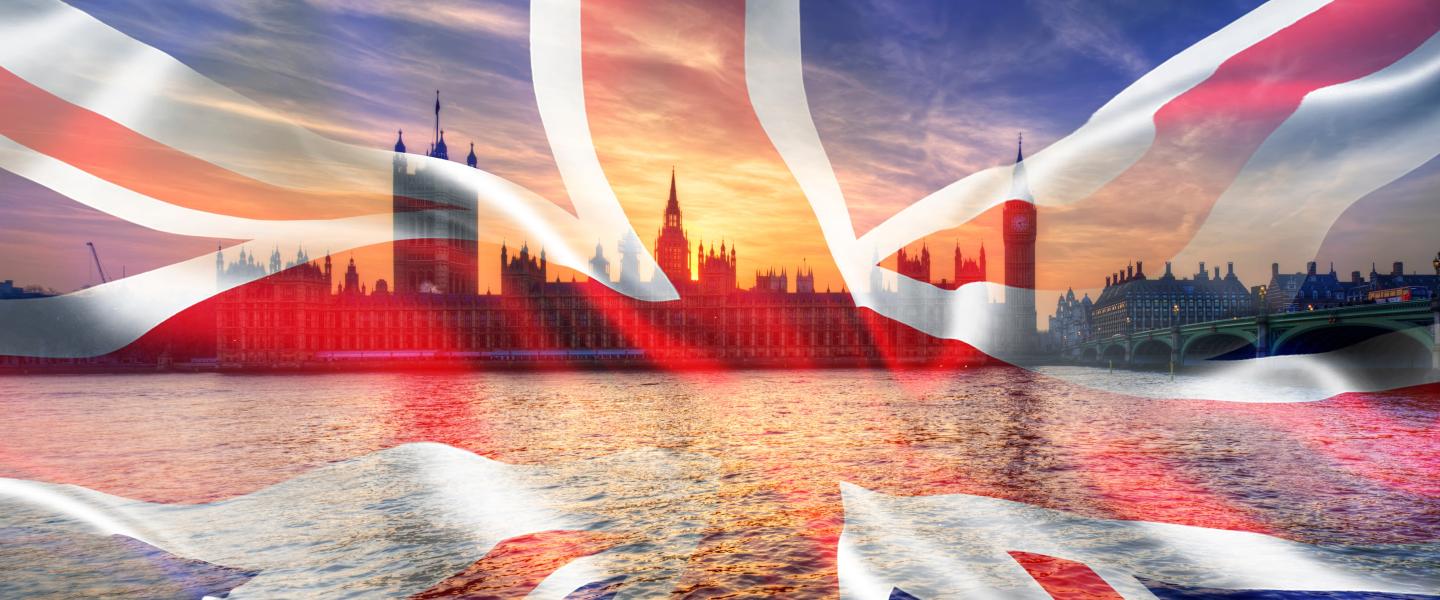
Not a moment too soon the publication of a Civil Society Covenant and Programme reflects a new principles-based arrangement for re-setting the relationship between the UK Government and civil society.
Within the UK democracy engagement between government departments and civil society has often been a complex and siloed one.
The voice of the people enshrined in the establishment and conduct of the UK political process where Members of Parliament are democratically elected by citizens to represent their voice in the Westminster Houses of Parliament is a core foundation of UK law, policy and process.
Nonetheless, it has not been until this last week and on 17 July 2025, that a more formal state of affairs with civil society was established.
About
The new Covenant symbolises the UK Government’s recognition of civil society as a trusted and independent partner in tackling the deep seated challenges of our time. It underpins a strong, sustainable, and independent civil society capable of collaborating with government alongside a responsive government that works with civil society to achieve its mission.
The Covenant is a living set of principles which will help to build effective partnerships right across the breadth of civil society and government, without cutting across existing administrative or statutory frameworks. The Covenant is relevant across the UK in policy areas where responsibilities are reserved to the UK Government and not devolved to the governments of Scotland, Wales and Northern Ireland.
The Civil Society Covenant was launched by the UK Prime Minister at a major summit on 17 July 2025, bringing together key representatives from government, Civil Society, and the Impact Economy to explore how collective partnership can deliver on the government’s priority missions.
Human Rights' Protections at Sea
For necessary engagement on the issue of better protection for persons living, working, or otherwise moving by sea; the formalisation for UK Government departments to recognise, build better understanding about, and work closer with civil society could not have come at a more critical time.
With the immense pressure on assuring human rights' protections around the globe being tested well beyond established customary and legal frameworks, there is a pressing need for greater mutual understanding and co-ordination.
In the maritime environment, the application and recognition of the rule of law remains under constant pressure, as does its effective application through national legislation and international convention.
This includes, but is not limited to, the continuous need to address worker's rights, fair and equitable protections of migrants and refugees, ensuring the fair working practices for foreign crew, addressing of seafarer abandonment, addressing modern slavery and human trafficking at sea, ensuring equity for women working at sea, addressing bullying and harassment, and ensuring effective deterrents from criminal activities.
All such matters remain consistent issues for the UK Government both at home and abroad.
Comment
Human Rights at Sea Founder, David Hammond, said: "With the current poor state of international relations, expanding armed conflict activities, war-like conditions in key maritime chokepoints, criminal activities at sea, attacks on seafarers, and the consistent flaunting of core human rights protections around the world; the requirement for the UK Government to draw closer to, and work objectively with, civil society has never been so timely. This includes strengthening deterrence activities to address all human and labour rights abuses occurring at sea."
Read More about the Civil Society Covenant: https://www.gov.uk/guidance/civil-society-covenant-programme
ENDS.
Source: Human Rights at Sea
Photo: David Hammond 2023
Contact: If you have any questions, please write to us at enquiries@hrasi.org.
About Sharing. We welcome the use and dissemination of our copyrighted work with full, accurate and proper accreditation. Open Access This article is licensed under a Creative Commons Attribution 4.0 International License, which permits use, sharing, adaptation, distribution and reproduction in any medium or format, as long as you give appropriate credit to the original author(s) and the source, provide a link to the Creative Commons licence, and indicate if changes were made. The images or other third party material in this article are included in the article's Creative Commons licence, unless indicated otherwise in a credit line to the material. If material is not included in the article's Creative Commons licence and your intended use is not permitted by statutory regulation or exceeds the permitted use, you will need to obtain permission directly from the copyright holder. To view a copy of this licence, visit http://creativecommons.org/licenses/by/4.0/.
©Copyright and Intellectual Property of Human Rights at Sea (HRAS) 2025. All rights reserved.