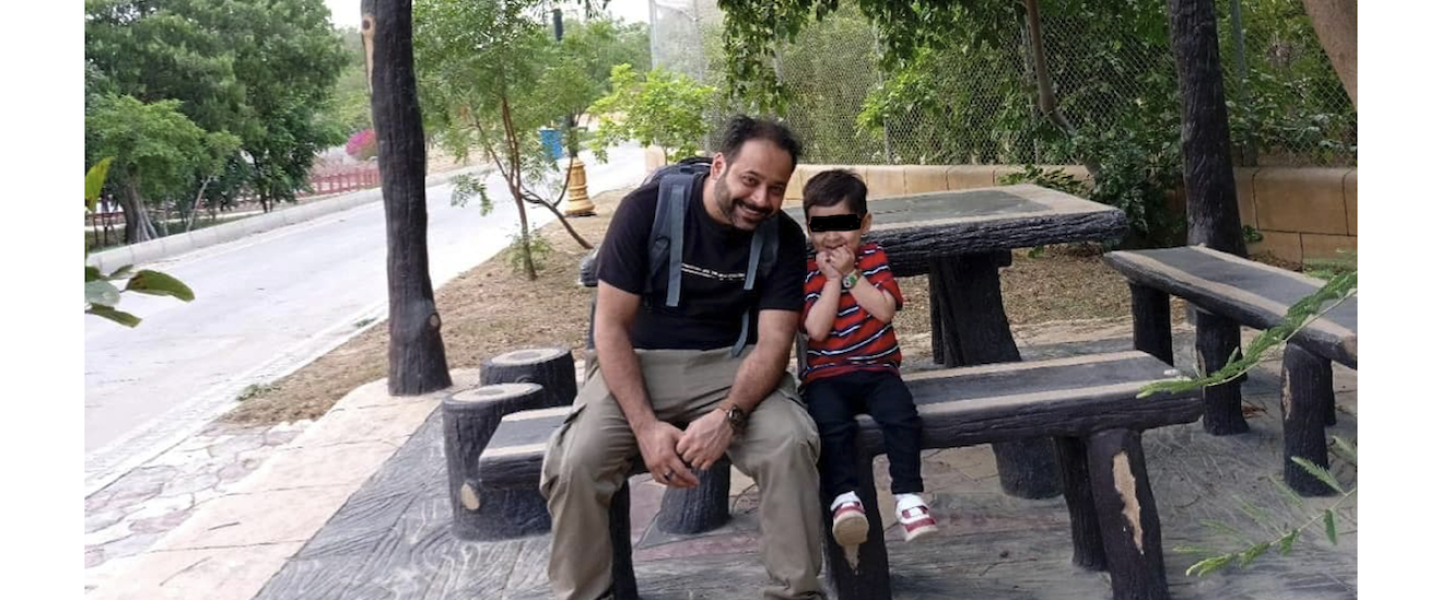
Since the current conflict in the Middle East began on 28 February 2026, the IMO has verified at least 80 attacks on international shipping in and around the Strait of Hormuz, resulting in the deaths of at least 22 seafarers and injuries to many others.
The exact number of seafarer casualties have been difficult to track as geopolitical actors continue to target merchant shipping in the Middle East and beyond.
This uncertainty can leave families suffering for prolonged periods of time, as in the case of Mr. Muhammad Hammad Obaida. Hammad joined the MT El Gaia on 6 September 2026. On 13 September 2026, the vessel was attacked in the region of the Strait of Hormuz. While 23 crew members were rescued, Hammad and another crew member remained missing.
His family waits in uncertainty, without official confirmation of his fate. “We cannot properly grieve without confirmation,” said his brother, Mr. Muhammad Fawwad Obaida. “If he is among the recovered remains, we want him correctly identified and brought home with dignity.”
Fawwad prepared a Family Impact Statement for Human Rights at Sea on 8 October 2026.
FAMILY IMPACT STATEMENT
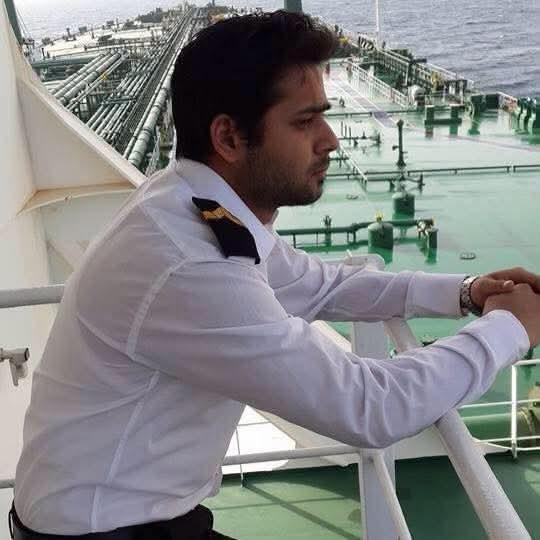
My brother, Muhammad Hammad Obaida, is a Pakistani seafarer who joined MT El Gaia on 6 September 2026. He is a husband, father, son and brother. He has a three-year-old son, and his wife is expecting another child. On 13 September 2026, the vessel was attacked in the region of the Strait of Hormuz. We understand that 23 crew members were rescued, while Hammad and another crew member remained missing. Since then, our family has been living with uncertainty about his fate.
Recovery and Identification
On 25 September, our family was unofficially informed that bodies had reportedly been recovered. This was not an official confirmation that either body was Hammad. We subsequently understood that it took approximately 5–6 days for the bodies to be brought ashore at Sohar Port on 1 October. We understand the distance involved was relatively short, approximately 60 km. We do not know why the transfer took this long and have not been provided with a clear explanation.
We fully understand that there may have been operational, security, legal, maritime or other reasons for the delay, and we do not want to make assumptions. However, given the circumstances, we believe the family deserves an explanation of what happened during those days and how the bodies were handled and preserved.
A medical examination was completed on 4 October. Since then, we have not received clear information regarding the outcome of the examination, the identification status of the bodies, or the next steps. As of 8 October 2026, we still do not have official confirmation that either recovered body is Hammad. Our family has been clear that we do not want identification by assumption or elimination. If Hammad is among the recovered remains, we want his identity positively established through a proper forensic process, including DNA comparison with a close biological family member where required.
We also want clear information about the DNA sampling and testing process, chain of custody, expected timeline and, wherever legally possible, family representation during the identification process in Oman.
Impact on the Family
The uncertainty has been extremely difficult for all of us. Hammad's wife is expecting another child, and she is now facing the future without knowing what has happened to her husband. His three-year-old son is growing up without his father during this period of uncertainty.
Hammad's income has also been an important source of support for his wife and, to some extent, his parents. His absence therefore creates not only an emotional loss but also serious uncertainty about how his wife, children and dependent family members will manage financially in the future.
We do not know what lies ahead for them. As his brother, I have been trying to support my family while repeatedly seeking information from the vessel management, manning agency, government authorities and other organizations. The constant uncertainty, waiting and need to seek answers has been emotionally exhausting. The hardest part is that we cannot properly grieve without confirmation, yet we also cannot return to normal life while there remains uncertainty about whether Hammad is among the recovered remains.
Hammad's Communications
Hammad remained in contact with his family while onboard. We have messages, photographs, voice notes and other correspondence. These communications are important to us because they show his normal life onboard, his connection with his family and the person behind the name on the crew list.
Our family respectfully requests:
1. Official confirmation of the status of the two reportedly recovered bodies.
2. An explanation of the 5–6 day period before the bodies reached Sohar Port, including the circumstances and handling of the remains during that period.
3. Information regarding the medical examination completed on 4 October and what remains pending.
4. Proper forensic identification, including DNA comparison with a close biological family member where required.
5. No identification by assumption or elimination.
6. Clear and regular communication with the next of kin regarding the identification process.
7. Wherever legally and practically possible, family representation during DNA sampling/identification in Oman.
8. If Hammad is positively identified, prompt and dignified repatriation of his remains to Pakistan.
Our family understands that proper forensic and governmental procedures take time. We are not asking for speculation or an unverified answer. We are asking for transparency, proper identification and certainty. Hammad is not simply a missing seafarer. He is a husband, a father, a son and our brother. His wife, children, parents and siblings deserve to know what happened to him. If he is among the recovered remains, we want him correctly identified and brought home with dignity. We have been waiting since 13 September. We need answers.
ENDS.
Source: Human Rights at Sea 2026.
Photo credit: Muhammad Fawwad Obaida.
Contact: If you have any questions, please write to us at enquiries@hrasi.org.
About Sharing. We welcome the use and dissemination of our copyrighted work with full, accurate and proper accreditation. Open Access This article is licensed under a Creative Commons Attribution 4.0 International License, which permits use, sharing, adaptation, distribution and reproduction in any medium or format, as long as you give appropriate credit to the original author(s) and the source, provide a link to the Creative Commons licence, and indicate if changes were made. The images or other third-party material in this article are included in the article's Creative Commons licence, unless indicated otherwise in a credit line to the material. If material is not included in the article's Creative Commons licence and your intended use is not permitted by statutory regulation or exceeds the permitted use, you will need to obtain permission directly from the copyright holder. To view a copy of this licence, visit http://creativecommons.org/licenses/by/4.0/.
©Copyright and Intellectual Property of Human Rights at Sea CIC (HRAS) 2026. All rights reserved.