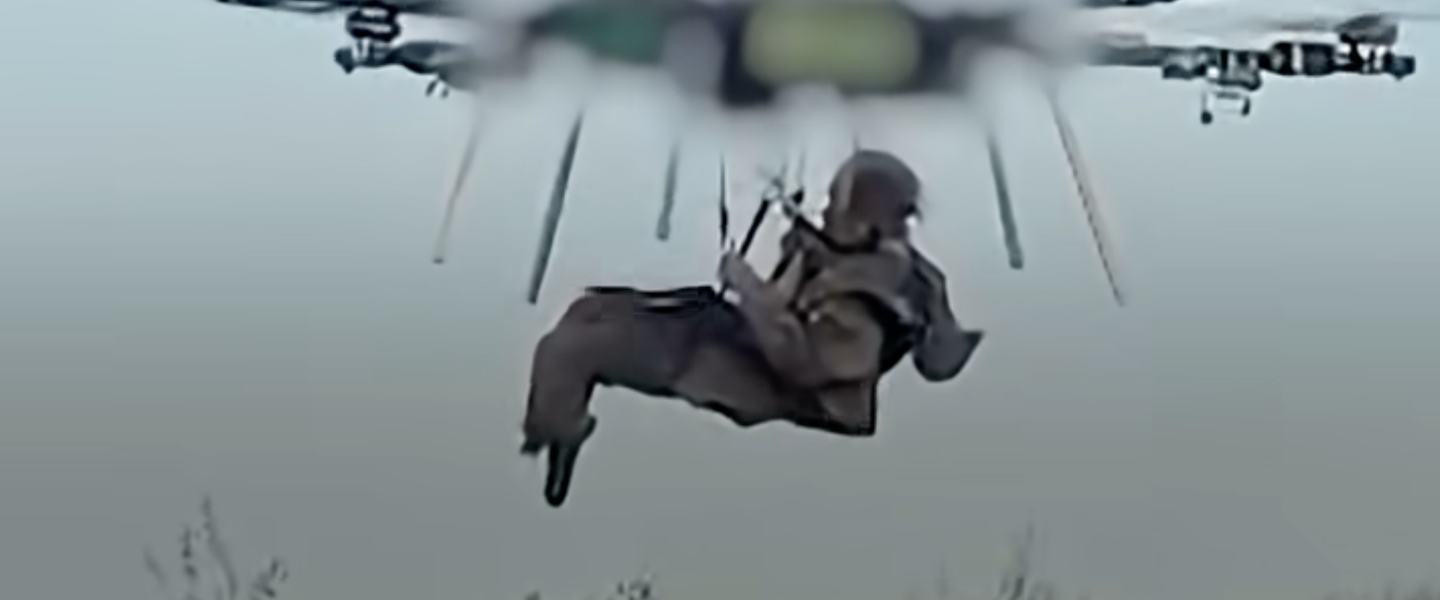
OPINION. LONDON. 25 November 2026. The co-ordinated rescue of 49-year-old Ukrainian soldier Kostiantyn Vlasenko from a frontline saturated drone kill zone sets the standard for valuing the individual life, liberty and security of an employed person.
At Human Rights at Sea we call it the 'Vlasenko Effect'.
It is an example which arguably shames responses and remedies from the collective body of the global maritime industry when compared to the sustained reporting of abuses against seafarers.
Kostiantyn spent 491 days alone on Ukraine’s frontline.
He lost both feet as the result of drone strikes on his position confined to a hole under a boiler in a bombed-out school.
He was successfully recovered back to Ukrainian lines in the first known rescue of a wounded soldier by aerial drone in what was a co-ordinated and complex operation.
The degree of care and core mentality of not leaving anyone behind is a hallmark of Ukraine civilian and military operations. It should also be the standard of response for all abused crew, regardless of nationality, employed in maritime supply chains; but it is not.
DISPOSABLE ASSETS
Today, seafarers can be classed as 'disposable assets'.
'Disposable', because they are easily replaced with individuals often needing to make a living and support their dependants. 'Assets', because without workers the industry cannot operate.
Exploitation during recruitment, training scamming, debt bondage, criminalisation, abandonment, direct targeting during armed conflict, restrictions on access to medical care, restrictions of access to shore leave, sexual abuse and exploitation, unpaid wages; the list continues.
The maritime industry has much to learn from the Ukrainian military, and their ethos.
ENDS.
Source: Human Rights at Sea 2026.
Image credit: 92nd Assault Brigade
Contact: If you have any questions, please write to us at enquiries@hrasi.org.
About Sharing. We welcome the use and dissemination of our copyrighted work with full, accurate and proper accreditation. Open Access This article is licensed under a Creative Commons Attribution 4.0 International License, which permits use, sharing, adaptation, distribution and reproduction in any medium or format, as long as you give appropriate credit to the original author(s) and the source, provide a link to the Creative Commons licence, and indicate if changes were made. The images or other third-party material in this article are included in the article's Creative Commons licence, unless indicated otherwise in a credit line to the material. If material is not included in the article's Creative Commons licence and your intended use is not permitted by statutory regulation or exceeds the permitted use, you will need to obtain permission directly from the copyright holder. To view a copy of this licence, visit http://creativecommons.org/licenses/by/4.0/.
©Copyright and Intellectual Property of Human Rights at Sea CIC (HRAS) 2026. All rights reserved.